
Ruby Rewards
Ruby TuesdayFood & Drink
4.72.24K Reviews
- Version
- 1.4
- Installs
- 100.00K
- Age Rating
- Everyone
Screenshots
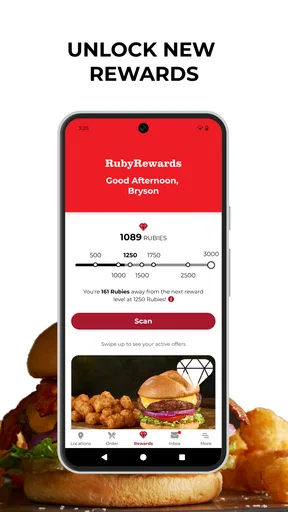
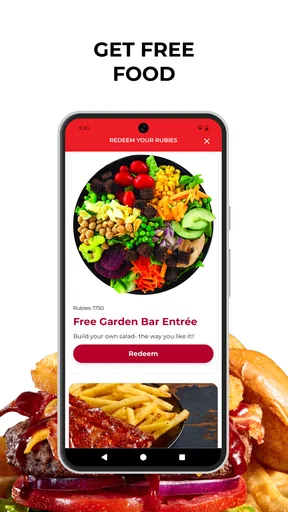
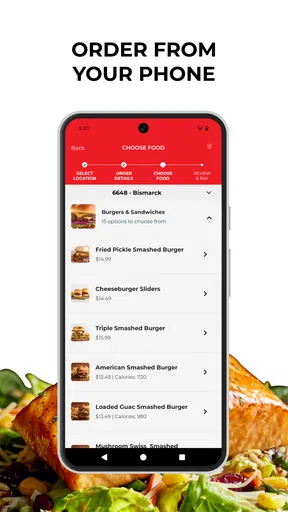
Our Review of Ruby Rewards
 Analysis by Appyee
I usually judge restaurant apps by what happens after the first order. A polished welcome screen is easy; the harder question is whether the app remains useful when the novelty disappears. Ruby Rewards, the free Food & Drink app from Ruby Tuesday, makes a straightforward promise: connect visits and orders with a rewards balance, then give you a reason to return. After spending time with it, I see the appeal, but also a clear boundary. It is most worthwhile for people who already eat at Ruby Tuesday, not for someone looking for a broad restaurant-discovery tool.
The app is built around Ruby Rewards, with rubies that can be traded for food. It also supports ordering ahead, which changes its role from a simple loyalty card into something I can use before I arrive. That combination is practical: one part keeps track of the relationship with the restaurant, while the other can reduce waiting when I already know what I want. The experience feels focused rather than overloaded, and that is a good fit for a restaurant-specific app.
What stays useful after the first visit
I find the lasting value of Ruby Rewards less in discovering new functions than in making a familiar visit easier to plan. Before heading out, I’d use it to decide whether ordering ahead or checking my rewards is the more useful step that day; that small choice can keep the app from becoming another routine I follow automatically. From there, the important question is how comfortably that routine works across different ways of using a phone.
The first-week appeal is easy to understand
My first impression is that Ruby Rewards has a clear purpose. I do not have to sort through unrelated restaurants, cooking content, grocery offers, or delivery marketplaces. The app is for Ruby Tuesday, and the main reasons to open it are visible in that narrow focus: rewards and ordering ahead. For a regular customer, that directness is more valuable than a long list of features I will never use.
The reward system gives an ordinary meal a second layer of value. Instead of treating a visit as a one-time transaction, I can view it as progress toward food later. That is a small psychological difference, but it matters when choosing between eating at a familiar restaurant and trying somewhere else. The benefit is not just the eventual redemption; it is having a reason to remember the brand when I am deciding where to go.
Ordering ahead is the feature I found most useful in a realistic weekday situation. Imagine finishing work later than expected, wanting dinner before going home, and not wanting to stand around while an order is prepared. I can use the app to place the order before leaving, then plan my stop around that timing. It will not solve every delay, and it cannot make a busy restaurant instantly quiet, but it is more convenient than waiting to start the process at the counter.
That workflow also helps when I am ordering for more than myself. A family member can decide what they want while I am still at home, and I can review the order before submitting it. I would still check the final details carefully, especially if the group has substitutions or specific preferences. A dedicated restaurant app can be faster than a phone call, but speed is only helpful when the order is accurate.
The app comes from Ruby Tuesday, and its identity is consistent with that single-brand approach. It is not trying to replace every food service on my phone. That makes the decision simple: if Ruby Tuesday is already part of my routine, Ruby Rewards has a place; if not, the app has little reason to stay open.
Rewards are most effective when they become a habit
The strongest part of the concept is the connection between repeated behavior and a future meal. I do not need to remember a paper card or rely on a separate loyalty wallet. The app gives the reward relationship its own home. For someone who visits occasionally but consistently, that can be enough to turn scattered visits into a more deliberate pattern.
I would use it before deciding where to eat, not only after arriving. Checking the rewards balance first can influence whether I choose Ruby Tuesday for a casual meal, particularly when I am already considering the restaurant. This is one of the less obvious benefits of a loyalty app: it can affect the decision before the order begins, rather than merely recording the purchase afterward.
There is also a useful distinction between the rewards function and the ordering function. I do not need to use ordering ahead every time to get value from the loyalty side. On another day, I might visit spontaneously and still want the rewards account. Conversely, I might place an order ahead when convenience matters more than collecting or redeeming anything. Keeping those two purposes together makes the app more flexible than a digital coupon screen.
Month-to-month value depends on your restaurant pattern
After the first few uses, the app’s value becomes much less universal. A person who visits Ruby Tuesday every few weeks has a natural reason to keep it installed: rewards can accumulate over time, and ordering ahead remains available when needed. Someone who only downloaded it for a single promotional moment may find that the app becomes irrelevant once that occasion passes.
This is where I think the app earns its space for the right audience. It does not need to offer endless new content if it reliably handles the same recurring tasks. I would rather have a focused app that makes ordering and rewards easy than one filled with features that distract from those jobs. The test is whether the next visit feels simpler because the app is already there.
The current version is 1.4, and it runs on devices using operating system version 10 or later. That makes compatibility an important practical check before downloading, particularly if you keep an older phone for everyday use. On a supported device, the app is positioned as a current companion for the restaurant rather than a one-time digital flyer.
Its public reception is encouraging, with a 4.7 average from around 6,500 ratings and about 2,200 written reviews. More than 100,000 people have installed it, so this is not an obscure experiment with no visible user base. I still would not treat popularity as proof that every order will be smooth. Restaurant apps depend heavily on the quality of the local ordering and pickup experience, and that can matter more than the interface itself.
What I would check before relying on it
The first practical question is whether your usual Ruby Tuesday location supports the ordering workflow in a way that suits you. A restaurant-specific app is only convenient when the selected location, pickup timing, and menu choices match what you need. I would choose the location carefully, review the order before paying or submitting it, and avoid assuming that an order placed ahead means I can arrive at any moment without consequences.
The second question is whether you will use the rewards regularly enough to remember the account. Loyalty programs lose their appeal when the customer forgets to open the app, misses the chance to connect a visit, or lets the reward balance become an afterthought. I recommend opening it before ordering rather than trying to reconstruct the visit later. That simple habit reduces the chance of treating the app as an extra step.
The third question is whether your eating habits fit a single-brand program. If you rotate between many restaurants, a general payment wallet or a broad delivery service may be more useful as a daily tool. Those alternatives can put several restaurants in one place, while Ruby Rewards gives deeper attention to Ruby Tuesday. The trade-off is specialization: less breadth, but a more direct connection to one restaurant.
Maintenance is light, but attention still matters
One reason I can imagine keeping Ruby Rewards installed is that it does not demand constant management. I do not need to browse it every day or learn a complicated system. Its maintenance burden is mainly behavioral: remember to use the app when ordering, keep the correct restaurant location selected, and check the rewards area when planning a visit.
That sounds minor, yet small points of friction determine whether loyalty apps survive on my phone. If I have to search through several screens before finding the reward balance, I am less likely to check it. If ordering ahead requires too many decisions before I can confirm the meal, I may return to the familiar alternative of ordering in person. The app’s long-term success therefore depends on being quick at the exact moments when I am hungry or in a hurry.
I also prefer to treat the app as a convenience rather than as the only way to interact with the restaurant. A phone battery problem, weak connection, or last-minute change can make a paperless process less comfortable. Keeping expectations realistic helps: the app can prepare an order and organize rewards, but it cannot replace judgment at pickup or guarantee that every situation will fit the digital workflow.
The free price removes the biggest installation barrier. I can try it without committing money, which makes experimentation reasonable even for an occasional customer. Still, “free” does not mean it is automatically worth keeping. The real cost is attention and storage, and an app that never supports an actual Ruby Tuesday visit is simply clutter.
Where fatigue begins
The first source of fatigue is repetition. Once I understand how rewards and ordering ahead work, there may be little new to discover. That is not necessarily a flaw for a utility app, but it means the product must be dependable. A restaurant loyalty app cannot rely on novelty forever; it has to make the same routine feel easy each time.
The second is the narrow scope. I cannot use Ruby Rewards to compare menus across unrelated restaurants or manage a broad collection of loyalty programs. If I am choosing between several nearby places, a general restaurant platform may help me decide more effectively. Ruby Rewards becomes strongest after I have already chosen Ruby Tuesday, not while I am exploring every option.
The third is the possibility of overvaluing rewards. A reward can make a familiar meal feel like a better deal, but it should not push me into spending more than I intended. I would use the app to organize visits I already want, rather than treating rubies as a reason to make unnecessary trips. That is the healthier long-term approach and keeps the loyalty feature from controlling the decision.
There is also a small mental burden in managing expectations around redemption. Before planning a meal around a reward, I would open the relevant section and confirm what is available in the app at that moment. This is a useful precaution with any restaurant loyalty program. The important point is to check before ordering, not assume that a remembered benefit will automatically apply in the way I expect.
Who should install it, and who should skip it?
I recommend Ruby Rewards to regular Ruby Tuesday customers, especially people who often order takeout or want to reduce the time spent waiting for a meal. It is also a sensible choice for households that return to the same restaurant and can build a simple routine around checking rewards before ordering. For those users, the app combines two relevant tasks without asking them to maintain a separate loyalty card.
I would be more cautious if you visit Ruby Tuesday only once or twice a year. The free download makes trying it harmless, but the ongoing benefit may not justify another app on your phone. The same applies if you prefer discovering new restaurants, comparing delivery options, or keeping all loyalty programs inside a single general-purpose service. In those cases, the broader alternative may be more useful even if it is less focused.
People using an operating system older than version 10 should also check compatibility before making plans around the app. For everyone else, the decision is mainly about frequency and convenience, not complexity. If you can picture yourself opening it before several future Ruby Tuesday meals, it has a reasonable chance of becoming part of your routine.
My long-term verdict
Ruby Rewards earns lasting space when it supports a real Ruby Tuesday habit, not when it is treated as a one-time coupon container. Its best qualities are its focused purpose, the ability to trade rubies for food, and ordering ahead for days when timing matters. Those functions complement each other without trying to become a complete food marketplace.
My honest reservation is that the app’s usefulness rises and falls with the restaurant itself. If Ruby Tuesday is not already one of your regular choices, the rewards system will not create much value on its own. Even for existing customers, the app needs a little discipline: open it before ordering, verify the location and order details, and check the reward information before relying on it.
For me, that is a fair trade. I would keep it installed if I visited the restaurant often enough to use both sides of the app, especially ordering ahead during busy evenings and checking rewards before settling on dinner. I would remove it if months passed without a visit. In other words, Ruby Rewards is not an essential food app for everyone, but for the right customer it can quietly become a useful part of the monthly routine.
As a free app rated for Everyone, it is easy to try, and its strong user response suggests that many people find the focused approach worthwhile. My recommendation is simple: install it before your next Ruby Tuesday order, use it through a few ordinary visits rather than judging it from the welcome screen, and then decide whether the convenience is recurring enough to deserve permanent space. For regular guests, that test is likely to favor keeping it; for occasional diners, the usual broader alternatives may be the better fit.
Verdict
Strengths of Ruby Rewards
- Simple interface makes rewards easy to browse and redeem.
- Frequent promotions can increase the value of everyday purchases.
- Reward options are clearly organized within the app.
- Account access is convenient across supported mobile devices.
- Useful for users who regularly shop with participating brands.
Limitations of Ruby Rewards
- Rewards may be limited to specific stores or eligible purchases.
- Some offers can include expiration dates or redemption restrictions.
- Availability and benefits may vary by location.
- You may need to share personal details to create an account.
- The app’s value depends heavily on having nearby participating retailers.
Similar Picks in This Category
View All
Rappi: Food Delivery, Grocery
Rappi, Inc - Delivery3.5

McDonald’s: Cupons e Delivery
Arcos Dorados4.3

Swiggy: Food Instamart Dineout
Swiggy4.7

Blinkit: Groceries & more
Blinkit4.8

foodpanda: food & groceries
Foodpanda GmbH a subsidiary of Delivery Hero SE4.0

Zomato: Food Delivery & Dining
Zomato4.7
Frequently Asked Questions
What is Ruby Rewards and how does it work?
Ruby Rewards is a rewards-based mobile app that lets users complete available activities, offers, surveys, or other in-app tasks in exchange for points or virtual currency. After reaching the required balance, users may be able to redeem their earnings for supported rewards. The exact tasks, rates, and redemption options can vary by location, account status, and current promotions.
Is Ruby Rewards free to download and use?
Ruby Rewards is generally free to install, and users can usually create an account without paying an upfront fee. However, some activities may involve third-party offers, subscriptions, purchases, or specific eligibility requirements, so it is important to read each offer carefully before participating. Never provide payment details unless you fully understand the terms and intended charge.
How can I earn points or rewards in Ruby Rewards?
Earning methods depend on the features currently available in the app and your region. Common possibilities include completing surveys, trying sponsored applications, watching promotional content, reaching goals, or participating in special campaigns. Each activity should display its reward and conditions. Keep records of completed offers, because some rewards may require verification or take time to appear.
How do Ruby Rewards withdrawals and redemptions work?
Once your account reaches the minimum redemption threshold, Ruby Rewards may allow you to exchange points for one of its supported payout methods or digital rewards. Availability can differ depending on your country and account. Before requesting a withdrawal, check the minimum balance, processing time, identity requirements, expiration rules, and any restrictions that could prevent an otherwise completed reward from being approved.
Is Ruby Rewards safe and worth using?
Ruby Rewards can be worth trying for users who are comfortable completing optional tasks in their spare time, but it should not be viewed as a dependable income source. Review the permissions requested, privacy policy, and terms before registering, and avoid sharing unnecessary sensitive information. Users should also understand that rewards may be limited, delayed, or unavailable for certain activities or locations.
